Monday, December 19, 2011

Send In The Clowns

For our 201st posting, we're a little embarrassed to squander electronic ink on the the clowns running around in the Republican circus tent, but it's a perfect storm this Monday -- I can't resist.
Salon just named everyone's favorite old weasel, George Will, to this year's list of the 30 biggest pundit hacks.  That would have been enough amusement in itself, but today Will was aghast in his column  (as always, gratuitously wordy self-pleasure) at Newt Gingrich  for bashing capitalism!  Now, other fellow conservatives pretty much consider Newt to be the current Joe Isuzu, but when he criticized Mitt Romney for making his $300 million by bankrupting corporations and laying people off, Will went on the warpath. 
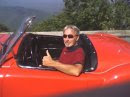
Romney had previously faulted anti-government Newt for charging $30,000 an hour to "advise" the unloved semi-government agency Freddie Mac (collecting $1.6 million total), prompting Newtie's return jibe at Mitt's equally ill-gotten gains.  Will maintains, in high dudgeon, that "firms like Bain Capital are indispensible for wealth creation...and we should welcome such animal spirits (as shown in the photo above of Mitt's early days at Bain) and hope for political leadership that will hasten the day when American conditions are again receptive to them."
Now, when did the day pass when the richest just manipulate money, debt and Wall Street jitters instead of actually do work and produce something of value?  And why is the end stage of capitalism, absurd globalized financialization, touted as the desirable sort -- instead of a civilized system which isn't just a mindless race to the bottom?
If he's lost George's affections, at least Newt has the endorsement of former Congressman Grandy (Gopher of Love Boat fame), who is also an idea man:  he claims the OWS movement is an Islamic plot against the United States.  It just keeps getting funnier.
Seriously, though, PLEASE nominate Newt for president this August in Tampa, GOPers!  The world loves a clown.


Thursday, December 15, 2011

WWOOFing!

Love what you do
Participating farms in the lower 48
The blogosphere is humming with questions stirred up by the OWS movement and the Arab Spring -- the Millenials are looking for a way out of a confusing mess, just like we were when our mess was the Vietnam War and the civil rights struggle.
They must feel like they're lost in the woods, full of animal and insect chatter that tells them nothing, and facing a multitude of choices in trails with no idea which ones go anywhere good, or just nowhere.
If one of us were standing there, we'd have to tell the young person that we really had it better, with our productive years ahead supported by great supplies of energy in the industrial world and entire new technical fields opening up, and without the horrifying prospect of 7 billion hungry competitors.  Whether we chose to fly up the ladder of conventional success and collect the prizes of money and possessions beyond any previous generations' hopes, or skim along doing our own thing and still enjoy a pretty good quality of life, we had viable alternatives.
In so many ways, I don't think they do.
They probably have a deep feeling that they're gripped in a vise:  the contracting economy will never provide opportunities for a good living as the population expands, and there's the reality of those huge student loans coming due.  We could scrape by, starting out, because rent was $100 a month and few of us, except those entering lucrative professional careers, owed anything.
Kids, that may be your answer.  What was old is new again.
In the coming decade, less and more expensive energy supplies will put constraints on exporting and importing foodstuffs all over the world.  Local production of food and fuel is creating livelihoods already that corporate monoculture based on revolving bank credit, migrant non-citizen labor and long-distance shipping had seemingly eliminated.
If it's felonious to suggest ignoring that student debt as a deal gone bad, then I guess I can't...
But say you're starting out at zero, with no obligations and few possessions (and that's a good thing) and have a little cash scraped up from overtime at Starbucks or from family -- there is an opportunity to go off the radar, learn valuable new skills and be ready to grow in a new simpler economy instead of suffering from the train wreck of the old one.
A nonprofit called Worldwide Opportunities on Organic Farms (WWOOF) pairs up volunteers (you) and one of 1300 participating agricultural enterprises all over, including Hawaii, Puerto Rico and the Virgin Islands (see map above).  There are even several near here, at Duncannon, Gettysburg, Columbia and Pine Grove, and one can learn about animal husbandry, crops, wine or honey production.  The deal is simple:  you work for 1/2 day for six days a week, and the host provides food and accomodation (although some of that is just your tent), but most importantly, skills you don't have to buy your own property to learn.  There's even one in Claremont, CA, that's just a half acre!  I've followed the popular blog from a well-known family which has supported all its members well for years on just such a plot (also in the mild CA climate), so right there is an opportunity to learn how they do it (except they bought the home long ago at a tiny fraction of today's cost).  A woman runs a CSA farm on the Oregon coast and had 50 WWOOF volunteers this summer -- it seems a real financial and social benefit for all (be sure to find her website at revolutiongardens.com with an extensive photo record of this past summer).  But it's just a change, a beginning; people will have to figure out how to use the connections made and skills acquired to develop the specifics of where and how they will make a living.
They might have to forget the formula education=good job=large home and cars.  But education is, I think, about learning how to learn, and that will prove useful from day one.  Tomorrow's engineer may be making biofuel systems with two partners, instead of working for Shell Oil in an office complex, but he or she may be pleased with their place in the world.

Monday, December 12, 2011

If It Looks Like a Hornet Nest, Don't Poke It

Commodore Matthew Perry in Japan

With computers, it may be that WYSIWYG, but geopolitics is better characterized as being smacked on the back of the head by one unintended consequence after another.
Westerners from exploring nations had found little welcome in Japan before the historic pivot point in 1854, when American Commodore Matthew C. Perry strong-armed the Tokugawa Shogunate into signing an agreement to open their country to trade.  For centuries, feudal Japan had been inward-looking, agrarian and self-sufficient.  Previous approaches by the United States in 1837, 1846 and 1849 were rebuffed, but Congress decided on a show of force; the Japanese realized upon the fleet's arrival that the fortress in Tokyo Bay (and some wooden cannon) were inadequate to put up effective resistance.
The changes that followed were unpredictably, unbelievably, swift and thorough.  The domains of 300 daimyo (local lords) were first consolidated into a unified nation under a restored figurehead emperor, then industrialized and militarized by an energetically efficient oligarchy.  In a half-century, Japan leapt up from its dreamy isolation to become the powerhouse which bloodied the nose of both the Chinese and the Russian empires.  Full of hubris like Perry, they, in turn, poked back at the ones who started all this, in 1941.
Do we learn not to throw rocks at the junkyard dog, knock the bee nest down, or put our tongue on the frozen flagpole? 
No, we do it again, like Nixon did "opening" China in 1972.  There were reasons of the moment, as commerce had been with Japan:  putting the USSR off balance, helping to extricate the United States from Vietnam, and potential "markets."  China got full diplomatic recognition in 1979 and Most Favored Nation trade status later.  That and NAFTA will cost us more than the awakening of Japan ever did.
China wants, and will have, the natural gas in the East China Sea and the oil in the South China Sea.  We just recently set up a Marine station in northern Australia.  You add it up.
As David Frum said, "maybe Nixon should have stayed home."


Thursday, December 8, 2011

Tony's Odd Neighbors

Moammar's summer house may be on the Multilist soon
Royalty in Bordentown
The characters who have washed up in tony northern New Jersey...
Jon Corzine, recently of the multimillions, has moved to Hoboken from Saddle River, not Manhattan as you'd expect.  Maybe he can call on Tony Soprano for tips on how to hold on to a fortune (Tony would tell him that gambling is for fools).
The Libyan government owns a mansion in Englewood, and Moammar himself was going to camp out on its front lawn in his Bedouin tent a few years ago, but the neighbors (one of whom is Eddie Murphy, but whether he cared isn't on record) wouldn't have it.  Never used by his ambassador for summer retreats as planned, it sits empty. 
The estate that once stood in Bordentown, Point Breeze, was built by none other than Napoleon's older brother Joseph after he abdicated as the appointed King of Spain following a revolt in 1813 (the one Goya pictured so devastatingly well).  He had not wanted to be a king, or a lawyer as his father had insisted, but rather a man of letters.  After moving to New York City and then Philadelphia, he enjoyed the largest library in the United States at the time in his New Jersey mansion.  It burned in 1820, probably due to arson perpetrated by a vengeful Russian immigrant.  He rebuilt, but left to return to Europe in 1839, dying a few years later.
Joseph left behind two daughters with his Virginia-born mistress, and younger brother Jerome left behind a baby Bonaparte after a brief American marriage in 1803 when he also returned home.  The last member of this family line met his end after tripping over a dog leash in Central Park in 1943.
Alpine, NJ, is home to many of the new royalty like Stevie Wonder, P. Diddy, Wesley Snipes and Lil Kim.
A motley crew!


Thursday, December 1, 2011

Squeezed

Smallest apartment in New York
Advanced materials and design in Tokyo
A really narrow lot
Despite ol' Newt's (not geologically or mathematically possible) claim that if the Sierra Club would just get out of the way the U.S. could produce 4 million more barrels of oil daily, some rational people seem be on to the constraints our energy needs and wants face:  only 12% of future homebuyers now want driving-required houses in the suburban fringe, preferring nearness to town centers and walkability.  But buildings use half our energy, and people in areas already provided with public transit, most stressed by population density and cost of living, are developing some surprising ways to survive in changing conditions.
A married couple and their two cats live in New York's smallest apartment, calling it a "microstudio."  Located in Morningside Heights, it cost them $150,000 and they have adapted by not cooking there and storing their work clothes in office closets.  No car, of course, but speaking of cars, their home is the size of a parking space (175 square feet).
In Japan, microhouses (kyosho jutaku) are being designed and built utilizing narrow spaces, by going long and up to three stories high and experimenting with advanced materials such as superthin steel membrane and fiber-reinforced plastic.  Inner walls, doors and closets are eliminated, among other things we would be more hard pressed to think about living without.  Toyko's building codes must be quite receptive to innovation and the inspectors uncharacteristically open-minded.
For non-urban areas, some like Californian Jay Shafer of Tumbleweed Tiny Houses, who lives in a 70 square foot cabin himself, design and build single homes well under 300 square feet.  He got some publicity on HGTV's Design Star; I hope that helps him with his dream of a community of such "cottage houses" connected by paths with a green commons in the middle.  In upstate New York (Utica, I think), a similar co-housing community has existed for quite a while -- space is conserved by communalizing what can be (i.e., laundry, tools and maintenance equipment).  In both cases, Jay's dream and the existing community, cars are banished to parking on the edge.  Shared and public transit may reduce their numbers.
There are technologies, some used in the marine and RV industries, which would help make such radical living space reduction possible and economical, such as 12 volt lighting and fan systems.
Hot air from our lobbyist-purchased leaders and fear peddled by the apocalyptic religious evangelist-entrepreneurs will not solve any part of the energy problem facing us.  Hope for all of us lies in the creativity and rationality of a few of us.
  

Monday, November 28, 2011

Yikes! What Bikes!


Bike mower -- could this work?

Ho Chi Minh Trail technology
Madsen cargo bike


E-Solex electric bike
  If  bike shops (outside of California) stocked some of the exciting new interpretations of that most efficient and economical machine, would they sell?  Highly featured and shockingly expensive baby strollers have found outlets and eager buyers, but they speak status rather than eccentricity.  Acceptability might follow the usual path of early adopters in vanguard enclaves, notice in the media, and then a favorable mainstream attitude vis-a-vis entertainment value + utility.
When huge and growing demand for fossil fuels slams headlong into declining supplies, we'll still need transport; the many ingenious varities of bikes and trikes now used for practical purposes in the third world might be one solution to the problem -- for the few fit enough.  I doubt if you see 350-pounders on Rascal scooters in the bicycling nations such as the Netherlands or China.
They do work, though -- the rickshaw trike can carry up to 500 pounds; for up and down hills I think you'd need an electric assist and sturdy brakes.  The North Vietnamese walked their heavily-loaded cycles through jungle and over mountains, but the Madsen cargo bike's design would do the job well for an urban guerilla going to Lowe's today.  And they're only about $1000; a car costs about $8000 a year to operate after a five-figure purchase price and sales tax to boot.  Not that a car, without public transit to use when distance and weather pose difficulties, wouldn't still be in the picture for most people.  Hybrids and all-electrics will make that possible.  Bicycle-based alternatives for light transport are out there, and you just may see them on the road someday soon.
The 50cc motorbike, moped or scooter has been used by millions in Europe and Asia; the Solex brand debuted in 1946 in France alongside the Vespa in Italy and they're still going strong due to well-focused design and quality.  The new 400 watt electric-motor E-Solex isn't available in the U.S., but at $2100 it's an attractive combination of trusty old and beautiful new.  Unfortunately, most of what is available here in electric bikes and scooters is made in China and promises a short life to disappointed buyers.
The Studebaker family knew when to transition from wagons to automobiles, and we know what a leap in transportation technology the Wright brothers' bike shop produced.  There are some inventive Wilburs and Orvilles at work around the world, and that's a comforting thought in challenging times.
ElliptiGO -- something really new

       (7/2012 update)  I just found out about the ElliptiGO, a real innovation, the brainchild of two former Ironman triathletes.  It was first introduced in California (of course) in 2010, and four arrived in a local (Camp Hill, PA) bike shop this year, which sold immediately.  If you ever wanted to take your indoor exercise equipment out into the fresh air, this is the way.  Described as looking a lot like a preying mantis, it will probably elicit a variety of reactions out on the roads!  This combination elliptical trainer/bike weighs about 37 pounds, has eleven speeds, can do 25 MPH and climb hills, while exercising older or beat-up limbs and joints safely.  The three models range from $1800 to $3500.  Looks like fun.

Wednesday, November 23, 2011

Galt's Gulch in the Seaweed

Ready-made island fort for sale!
James Bond villain's lair


As if the James Bond series were prediction, not fiction, we learn that yet another billionaire proves the rule that with great wealth comes great sociopathy.  PayPal founder Peter Thiel has put up $1.25 million to start the process for floating autonomous libertarian "countries" at sea.  Whereas the Bond villains wanted to take over the world, the real unbalanced superwealthy just want it to go away. 
For a little more, Peter could buy, for 4 million pounds sterling, an island fort built in the Victorian era (so perfect for a steampunk theme!) sited in the English Channel.  It has a 21 room luxury hotel, two helipads (a must-have for evil geniuses), a heated indoor pool, and can bristle with armaments again as it once housed 49 cannon as well as antiaircraft guns.  Peter, like all libertarians, really just wants to avoid taxes, so his plan is to head 200 miles west of San Francisco and eventually link up other oil-platform "islands" to make a nation recognized by the U.N. (a little libertarian contradiction inherent in that, but our Ayn Rand robo-clones today can't recognize cognitive dissonance for beans).
A Cato Institute utopia will not, as he might think, result in Plato's Republic; billionaires with limitless guns served by indentured serfs are no philosopher-kings  -- they're just mob bosses in a closed, rigged system (feudalism run by unrestrained aristrocrats and Church magnates all over again).  Yes, we had, in the 14th century, the "moral order based on freedom and individual responsibility" and "restrained government" that libertarians sputter about, and you can see it now in 15 failed states around the world.  Haiti is the exact image of what a libertarian nation is all about.
Aside from this silliness, islands of wealth effectively detached from the broader body politic have been established in the exurbs of cities such as New York, L.A., Philadelphia, Miami and Denver.  These wealthy enclaves, through local control, can fund large and well-equipped police forces supplemented by layers of private security.  Anyone looking out of place can be expelled and fined quickly.  They want or need nothing from the state and expect the same.  Meanwhile, a city in Michigan has removed its no-longer affordable street lights and miles of roads are returning to gravel all over the nation.  Mirroring the disappearance of moderates from Congress, families living in middle-income neighborhoods have declined from 65% in 1970 to 44% today.
The extremism of concentrated wealth here and the extremism of levelling (Mao's Cultural Revolution or Pol Pot's Stone Age ideal) are two faces of the same coin.  Neither ideology goes anywhere but off the cliff.  As Aristotle said, virtue always lies in the middle.

(The Hipcrime Vocab blog is the inspiration and principal source for this post.)