Saturday, November 22, 2014

Numbers Don't Lie


While looking a few things up for the last post on the ubiquity of advertising, I tried to find a good estimate of the number of ads, on broad average, we Merkins are bombarded with every day.  There are studies, going back decades, but the results ranged from 74 to 600.  So I couldn't really use any of those figures as they are all over the place.  Other than Mr. Silver's accuracy in surveying voters before the last presidential election, surveys and studies are often so biased by their purposes and agendas, as well as being compromised by small samples, that you might as well pull numbers out of a hat.

If you're paying attention, you can likely figure out what is going to happen yourself.  But people will try to make things happen their way by misusing numbers at every opportunity.

Let's look at a corner of the business world that is somewhere between the financial sector and used cars on the shadiness scale: hotels.  As you, my longtime reader, know, I had the eye-opening experience of working for a Marriott franchise hotel for five years as chief engineer.  Number one number: send $5000 a month to Marriott for the franchise fee.  With business travelers in the winter and tourists in the summer often filling the place up, as well as a convenient and safe location, that was no problem.  I watched my departmental budget numbers, and justified overages or highlighted under-spending with the best numbers I could, not made up but from the actual prices of parts, supplies and the probable life and usage level of each.  No problems until we were sold to a real estate investment (cough, exploitation) firm from Florida.  Then, my new budget according to those shiny, tanned folks with a resume of white collar crime and a stash of drugs in the Mercedes arrived, with numbers that did not correspond to reality at all. 

I.E., commercial washing machines and dryers work nonstop at least two shifts all day, every day, at hotels, and the parts are quite expensive.  If you buy exotic imported machines (which I would not have done), the price for anything is always several hundred dollars apiece.  My new laundry machine maintenance budget was $40 a month!  And soon enough, we received the instruction that profits were to be increased by double digit percentages monthly, while expenses were to be reduced similarly.  In what world is that possible? We had an 11-building campus, 5 acres of grounds, three parking lots, all of which when new might have squeaked by with a lower budget, but at halfway through its life and having been notoriously badly built (my predecessor said he saw them cutting the 2x framing lumber with chainsaws, and there were gaps in some roofs), it was a no-brainer that maintenance and replacement was going to get more expensive, just as with anything over time -- roads, buildings, cars or even your own self.

The actual amount of the fees and charges levied on your retirement or investment accounts seems to as closely guarded a secret as any of Merlin's spells or potions, especially if it's a 401(k) from your employer.  It's a complex arrangement, designed to obfuscate, like the closing on a home sale or buying a new car -- but at least in those two situations the numbers are sprung on you at the last minute, not off in a fog somewhere.

Other number games, past and present:

Remember when Secretary of Defense McNamara said that by any quantitative measure, we should surely win the Vietnam War?  That was what he was going by, and it was completely irrelevant.  But he had also been head of Ford, so he must have been an authority -- and highly educated authorities must know their facts and figures better than we ever could, right?  Numbers are only one tool, not the only tool, that is necessary to understanding a problem or situation.  Recently, I saw a program on the war where it was stated that 300,000 North Vietnamese turned 18 each year, and you can bet most, not just a few, were drafted.  That figure may be just pulled from thin air, too, but it's a number that we never heard at the time.

In the current noise about the Keystone XL pipeline, the usual suspects are claiming that its construction will mean 300,000 jobs.  Mmm hmm.  First, figures like this, hyped in the media, are made up.  An earlier estimate, when the project was more in state of limbo, was for about 35 to 350 full-time jobs after it was built.  And my numbers sense tell me that's probably a fanciful highest estimate, because the Koch Brothers and their buddies do not go in for pipeline maintenance (since there are 5000 leaks or breaks a year or more due to postponed or ignored maintenance requirements).  There will be a lesser number of on-call contractors, not legions of full-time employees gleefully spending their paychecks and enjoying their wonderful benefits in Small Town USA.

A few years ago, Hershey dropped two new products because they did not meet projected figures.  Both were selling and profitable, however, and many things take a while to develop an audience and grow; remember "Seinfeld" was ignored its first season, and "It's a Wonderful Life" was a disappontment at the box office.  But someone blinded by numbers pulled the plug, and all that R&D and production run-up was wasted.  Mr. Hershey discarded a lot of products as tastes changed over the years, too, but he had intuition and instincts that his successors probably disdain, while poring over the numbers.




Tuesday, November 18, 2014

Post No Bills


Some tourists notice these old signs in Rome and think they are street signs, since those are attached to buildings also -- and wonder why so many streets have the same name.  But both simply say, "post no bills" and usually look like they have been there a long time (well, like most everything else there).  Note the statute cited on them.  I found that the deal is, if you pay a fee and install the sign, people must leave your wall or building alone forever when they're putting up posters, signs or advertisements.  Unfortunately, the out-of-control graffiti sprayers can't be stopped (I saw a pair of massive 16th-century wood doors covered in squiggles of silver paint -- I guess we don't have all the idiots on this side of the ocean).

What if we could, in some similar way and under protection of the law, keep ourselves inviolate from invasive "bills," that is, marketing, advertising and all-pervasive commercial noise?  It's said lobbyists spend around $1 million a year to convince the Vermont legislature to allow roadside billboards -- it's one of the few places that believe that kind of pollution has no place in what they consider a nice-looking countryside (we'll agree with them on its quality).  We travel on Route 581 a lot to do our local business, and I can hardly believe how many billboards are on either side, blocking, almost, a view of the sky.  But gigantic advertising has rights that we residents do not.  The city of Santa Barbara, CA, keeps them at bay, along with other kinds of big, gross commercial signage.  They have a lot more to lose when it comes to obliterating the scenery than we do, but I do envy them and the Vermonters.

Maybe there is no causal connection, but in an age of hysterical, relentless marketing, in your eyes and ears and on every square foot around you, we have people losing it and spraying others with bullets or killing themselves.  The news and broadcast programming is mostly, "we'll be back, stay tuned," because most of it is promos and ads -- over a dozen in a row on cable stations.  When they start, I (and I hope others) search for something, anything, on another channel that's not trying to sell me cell phone service, cars, furniture of Gerber child life insurance.  How many ads are inside and outside a city bus?  Your mailbox is mostly full of...what?  An internet page takes quite a while to load because of all the ads, some of them with motion-sickness inducing shaking and jumping.  I "x" them pretty quickly.  The mute button on your TV remote may be the modern invention that has benefitted our mental health the most. 

And it's all lies.  You can ignore every bit of it and never miss one useful thing.  A blogger checked out the math on that Gerber life policy, for example, and guess what, it's not a good deal.  As soon as reviews showed up on the internet, there were paid shills and "groomers" (like ww.Reputation.com )  moving negative reviews about a company or a product to the bottom of the search results and pushing the positive ones to the top places.  Not only search engine optimization, but Google itself, controls what you see and can find.  The fact is Google and Yahoo allow known scammers to advertise with slick come-ons when what they really want is your credit card number or other information to screw you with.  If there's a "trick to a tiny belly," it's not going to be found by clicking on that flashing ad during a Google search.  You need a lot more carefully tuned b.s. detector and cynicism than Joe Average.  It's not enough to possess just good common sense, but you always, at every waking moment, need that at a bare minimum.

Imagine you were living in 1750.  There were other concerns, like Indian raids or bad teeth, before you, but can you imagine no billboards along the road and no screaming ads dinning your ears or blinding your eyes?  Well, everyone would look like a Tea Partier, but still...


Sunday, November 9, 2014

It's Tempting


What you find irresistible changes over your lifetime, somewhat.  I, like many others, could not for years resist buying a beckoning book or record, but then I stopped cold like a successful ex-smoker when I realized enough is enough, already.  Other favorites will never leave your desirous gaze, but you can leave it at the gazing stage.  If I had a nickel for each time I've resisted the siren song of the bakery, I could probably well indulge other wants.  I wonder if one descriptor of character is how you act around cookies... Dark chocolate has grown on me to where now I can't resist it nearly as well as that scone.  It's always something unless you're internally as content as a Buddhist monk. 

Sometimes it works to give in to that tempting something just once in a while, which allows you to enjoy the warm feeling of virtue also, knowing you're in control of the situation and not the other way around.  Little things are easier, as such a lapse is easier to correct.  Let's say you have been jonesing for a boat or motorcycle or vacation condo so long that once it's affordable you stuff caution in the closet and make the plunge.  The best way to prevent this scenario is to admit that the law of hedonistic adaptation is like all those other laws of the world or physics, that is, it's always there and will hit you with an unpleasant dose of reality soon enough.  The thrill of finally possessing that shining something you've been wanting fades quickly.  You must either trade up to regain that feeling or continue the excess in some other way; hedonism, or feeding your desires, is a process that waxes and wanes like the moon, and eludes your grasp just like that silver satellite in the night sky.  Remind yourself before any decision that anything you own owns you more.

Will Rogers said that the road to success is dotted with many tempting parking spaces.  Funny, today we walked through a parking lot next to a tony golf resort, and the whelled hardware on display was any materialist's fever dream.  I was curious, but not envious.  A rear-engine Ferrari had its window down and the owner's EasyPass just lying on the console.  Did he really just take his quarter-million dollar possession so casually?  No doubt he had several other steeds in the stable. We also saw a super-high-end Mercedes, an S 550 (there were a few other letters, but I forget).  That brought a wry smile, as I'd read a remarkably frank article about S-series Mercedes recently, in which the author detailed the insanely complicated and expensive technology contained therein.  For example, you can't jump someone else's car from its battery, as its setup is so exotic that if you do so, you will short out your S's electrical system.  He also mentioned that the ignition switch assembly, which does not fail on your affordable Toyota, will probably do so on the Merc and cost you $500 for the part alone.  The foregoing is a wordy way to make the point that giving into expensive, blingy temptations is just like the mouse going for that piece of cheese in the trap.  It's going to cost you big time.  It's not going to be as much fun, by a long shot, as you thought it would be.  Walk away.

But you can give yourself a hall pass once in a while, if your house is in order.  Or rather, if your house is paid off, with no other debts.  That is the essense of freedom -- owning yourself and your assets outright -- and I think freedom to do or not do what is right for you, not what is temporarily distracting for you but really right for the lender, the corporation or the employer, ought to be the goal of your efforts in life. 

I can't say (like most of you, admit it) that I had any clear idea about what was worth getting obligated to when I was younger.  A hard road it is, Yoda would say, to learn only by experience.  A little quality insight earlier on in life's journey would have been great.  At least we can say the lessons eventually penetrated our hard heads, and temptations are seen for exactly what they are now, and a bad bargain is quite obvious.  A $100,000 loan on an RV when you're 68 years old?  A boat (they're the only thing just as bad as an RV -- well, and an airplane)?  An $800,000 house with about 70 windows and a lot the size of a big tarp like we saw next to the golf course today, built out of the same crappy materials as everything else today?  A car that depreciates 50% in five years, and costs as much as that boat to maintain and insure?  Those baked goods may ruin your health eventually, but choosing one of the above will put you under a lot faster.  Better work 70 hours a week, and lie and cheat, so you can get into one of those deals prisons. 

If you spend your days in the house of Desire, you will be his slave.


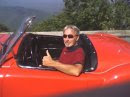
I almost bought one just like this once and am so glad I didn't.  Boy, was it fun to test drive, though.


Wednesday, October 22, 2014

The Getaway


They really are that polite.


So, we went to Canada and didn't see one moose!

Despite the lack of 1000-lb. wildlife (in the urban area of the Niagara Peninsula, so that's probably a good thing), we had not made a neighborly visit across the northern border since the late 70s and thought it was past time to do so.  Back then, we went to Montreal during a beautiful summer week, discovered Salade Nicoise and the beauty of hearing French spoken all around, then (pre-GPS) got hopelessly lost in its southern suburbs, but had a great time overall.

No such good fortune with the weather this time, but everything else was as delightful as before.  We lucked into a 29th floor room at a Marriott looking directly at Niagara Falls, which is quite a view to have both at night (with the illumination by giant lights and the weekend fireworks) and in the morning.  And not only had the iPad GPS directed us without fail, but some Trip Advisor internet research allowed us to escape the punishing $25-a-day parking fee by using the nearby casino's garage at only $5.  And gas prices are down while our aging car is getting better mileage all the time (why?), and the whole thing was arranged through a thrifty Groupon offer.  It pays to keep up with things.

Speaking of which, we didn't exchange domestic cash for Canadian, but instead relied on the VISA for everything, and that worked out fine.  We brought back the legal limit of wine (which isn't much), but the duty really isn't very high even if we had gone crazy.  The only problem there is that it's illegal to bring it into PA, so if on the very off-chance that we'd lost it to PA's finest, I'd rather lose four bottles than 40.  We did bring back more internally, starting with our waiter Brian's recommendation of a rose from a family operation named Trois Femmes.  We made sure we had one of Brian's tables thereafter, in gratitude.

Tourist season was pretty much over, which made getting around quite easy.  Despite the U.K. heritage, they don't do that wacky driving on the left thing, and the road signs aren't undecipherable European symbols.  Not only that, but the drivers actually obey the rules, yield to pedestrians, and don't yell and honk.  A Philadelphian would be dumbstruck.  But he'd still run the pedestrians down.  I guess there must be some disagreeable people somewhere in Canada, but I challenge you to find one.

 Unlike beach towns in October, though, all the restaurants were still open.  If you're a steak fan, you'd love downtown NF; I counted at least 14 steak places just in the neighborhood.  We, however, had our culinary sights set on getting to a Tim Horton's (Canada's Starbucks), and despite the one by the Falls being closed, you can always find another nearby (just like Starbucks).   It was too early for lots of heavy Canadian-style winter wear, but we felt that hanging out there gave us some genuine northern exposure.


You wouldn't think that a place with such trying winters would be a big producer of very fine wine, but the Peninsula is indeed that, so we set out on the one nice day to find out about it (get into your Eastern Canadian pronunciation here; it's aboot).  Both the Trius and Peller Estate establishments have lovely tasting rooms and impressive restaurants.  We took the tour at the latter to find out about (there it is again) ice wine.  It's a specialty of Canada and Germany, although produced in many other places with an appropriate climate.  After the first freeze, the winery calls the people who have signed up to come immediately and pick the now-frozen grapes all at once and barehanded (they do switch off on jobs, so no one is out long enough to get frostbite!).  After a taste of both their Vidal and rare Cabernet Franc ice wines, I'm very glad they do all that, but I'm surprised they get people do it more than once.  There is very little juice in the frozen grapes, the handling is labor-intensive, and it all depends on weather and timing, so the result is expensive and comes just in the little skinny half-size bottles.  We're saving ours for the holidays to go with that great Collin Street Bakery fruitcake  (and I don't want to hear from you fruitcake haters out there).


Old Town, N.O.T.L.  Like Williamsburg, with the occasional stuffed moose.


Last was a visit to a tasting shop in the charming Old Town area of Niagara-On-The-Lake, just a few miles past the wineries, where we discovered that the Wayne Gretzky wines were even better than the wonderful ones we'd sampled earlier.  Who knew?  If you ever find it near you, don't pass it up.  You really can't go wrong with any hockey/beverage connection in Canada, eh?


Canadian-flavor joke we heard at the dinner-theater production, "Oh Canada, Eh?" --

How are the Titanic and the Toronto Maple Leafs similar?

-- Both looked pretty good until they hit the ice!


Tuesday, September 30, 2014

"Behind Every Great Fortune Lies A Great Crime"


That pithy quote from Balzac should inform our opinion of top-tier tycoons, CEOs, Fearless Leaders, aristocrats and the untouchable oligarchy we now call the one percent.  But, as Edwin Lyngar demonstrated in a recent on-line article, most of us have an "overpowering need to behave like a middle-class sucker."  If you live a life of morality, modesty, honesty and fair dealing, you'll probably avoid jail, but your chances of becoming a Donald Trump are miniscule, since that's not how the elite got that way.

Living by the Calvinist moral framework a lot of us grew up with, is really, like faith and devotion to tradition, an easy excuse not to dig into things and think them through.  Mr. Lyngar found that, contrary to what we're told the rules for behavior/reward are, in fact his worst ethical lapse resulted in his biggest financial success (it involved a little fancy stepping during the short-sale of his home).  And that is how the elite got that way. 

I've never been clever enough to benefit greatly from a move like that, but I often think about something I felt I could not do that cost me.  In school, I would not read the "Cliff's Notes" guides because that would be cheating.  It seemed to me that everyone should approach new material in class on an equal basis, without coaching or preparation.  Of course, everyone else did who cared about their test results and grades, and there was no reward for trying to understand that book, play, poem, or theorem all on your own.  So Mr. Lyngar sidestepped strict ethics when presented with a problem, and came out ahead, while I plowed ahead with ethics intact and did not have enough right answers on exams about the intricacies of Shakespeare.  Also, resume padding by joining a raft of groups and activities that are pretty useless or you really didn't care about seemed dishonest to me, while it seems quite the opposite to college admissions committees.

When I first understood what business incorporation was, it seemed fishy.  "Incorporate" to avoid liability and financial responsibility while preserving your own assets?  Not paying your bills, hiding money overseas and slipping out of paying taxes is all right when someone could be sent to prison for twenty years for possessing a joint (and that happened, many times)?

Fred Koch, founder of Koch Industries run today by son Charles in Wichita, set the family fortune skyrocketing by stealing the refining technology from another company early in the 20th century, which he sold it around the world.  Even to the Soviet Union, a little bit of a hypocritical move since Fred was one of the main John Birch Society members.  He countersued when challenged, and around 1950 actually was the one who got paid.  Judges don't really care if the bribes and campaign contributions come from businessmen or Al Capone, I guess.  Al rotted away in jail for being indiscreet, while Joe Kennedy got away with millions from Wall Street "pump and dump" cons, the Bush family banked gold for the Nazis, and The Donald's father refused to pay his contractors and sued them if they objected.

We all saw the movie about Facebook being quite successfully stolen by Mark Zuckerberg.  And they must be teaching more about winning than doing the right thing at Harvard, since one of his predecessors there, Bill Gates, sold the DOS operating system to IBM which was stolen goods already: Tim Paterson's QDOS was a copy of Gary Kildall's CP/M operating system.  Bill did pay Tim $50,000 before licensing it to IBM himself and making some real coin.

The Roman patricians became oligarchs by sending fellow citizens, farmers and tradesmen, off on wars and taking their land from the widows.  The winning formula was to go right for the gold (in Asia Minor, against the Celts, and by looting the Temple after the Jewish Revolt) using those soldiers, then working those stolen estates with the free labor of the enslaved populations brought back.  The later European aristocracies -- the Norman invasion is the best example of a long lasting ruling class based on murder and wholesale theft since the Romans -- and our own Southern one also thought labor should never be anything other than free.  All also believe, then to now, that they should be exempt from taxes.  "Middle class sucker" thinking seems be in agreement with that principle since the Reagan era.  Existence of a (now ludicrously low) minimum wage means, as Chris Rock said, only that they'd pay you a lot less if they could.


Monday, September 22, 2014

This Is My Stop and I Want to Get Off


Some things you see, you don't forget.  Those are often the things you can't really say anything about, either, because your thoughts don't agree with tradition or with just the way things are done.

What I saw was while we were installing some routine added telephone and computer lines at Frey Village in Middletown, PA -- a nursing home.  And still I can't, or won't, bring myself to describe the people we passed by slumping in their wheelchairs in a hallway, in their rooms, or in a social area with others but still as alone as possible.  In a hospital, professionals are buzzing around, there is important-looking equipment flashing numbers and beeping, so despite what you see, you can think there's going to be some things fixed for some of the patients, if not, surely, for all.  There could be no hope for any of these ancients in the nursing home; it was as harrowing as a war scene.

A recent report from the Institute of Medicine made the news last week, and it stated bluntly that aggressive care prolongs dying without improving the quality of life.  Exactly what I've been thinking; even for those I saw so many years ago, who were completely out of it, the standard is to intervene relentlessly to keep them alive; trips made by ambulance from home to doctors' offices and hospitals and back, over and over.  While my father underwent this for nine months, from hospital to rehab to nursing home, the word that came to mind over and over was:  torture.

When a bipartisan group from the House and Senate proposed (in 2009) that patients could be counseled by their doctors about end-of-life care and be paid for their time through insurance or Medicare, the right wing noise machine blew up and hit the headlines with the "death panels" scare before the public even knew about that provision in the bill that was being considered.  The real reason for that dishonest outrage, other than predictable opposition to anything helpful to the helpless, was that no part of the healthcare profit machine should ever be contained, no matter how useless or unreasonable.  Since the largest part of Medicare is spent on the last few years of patients' lives, the prospect of bankrupting it as boomers flood the nursing homes, if nothing is done about prolonging the dying process soon, must have delighted the wingnuts.

Mark Evanier has written stories of his parents' lives many times on his blog (www.newsfromme.com), but the latest is relevant to considering the absurdity of pointlessly prolonging human misery:

When someone close to you dies, you look for that silver lining, however thin and fragile it may be -- some way to 'spin' the death in a way that's more comforting to you.  I had no trouble doing that...when my mother died because she really wanted to go.  She was verging on blindness and a life which did not contain one single thing that brought her any joy.

Mark's father, many years earlier, had seemingly willed himself not to live on as an empty shell after his third heart attack.  He knew he was not going to

recover to the point where he could walk and go out and get into his car and drive somewhere and do something useful.

Despite his own express desires, and the presence of a carefully written living will and clear health directives, there was nothing we could do to stop the endless and fruitless medical interventions during those bedridden nine months my father endured. Only twice were people candid about what the situation was.  Early on during that period, I talked to the rehab hospital care coordinator when everyone else was out of the office and the door was closed, making it clear I wanted her honest assessment apart from the official script of false comfort (Plaza West in Florida is part of a giant corporation).  She said quietly, "he's not going home.  This is it."  And on the last admission to the hospital after being moved here, while Dad was still unconscious in the emergency room, a young doctor took us aside in a shadowy corner and asked what we wanted.  ...He said we were right, and at that point everything changed: he recommended that hospice begin as soon as possible and Dad be moved to a quiet private room. Within a half hour, all the tubes, needles and lines were removed except for an increasing morphine drip.

But a peaceful end could not be found much earlier despite there being no hope of recovery.  Does that make any sense?


Saturday, September 13, 2014

Lift the Veil, and...


...you just find another one.

Some things just become more ambiguous, not clearer, the more you look into them.  Mostly, to avoid these headaches, people either just accept things (like the frog who gets boiled without noticing that his future is changing for the worse as the heat under the pot is turned up very slowly), or they have beliefs that save them the trouble of thinking matters through.

So, recently Coca-Cola announced that they are going to go to a 100% bioplastic "plant bottle" which is made from plant materials instead of being petroleum-based.  Right now, their bottles are already 30% made from such renewable feed stock (petroleum being, for a fact, despite the claims of scientists such as S. Palin, both finite and non-renewable).  The other 70% is now PET plastic along with some chemicals for softening and flexibility. To make the project economically as painless as possible, they're partnering with a Wisconsin company, Virent, to refine the process of producing purer paraxylene from a byproduct of the biofuel production process.  Other large packagers are on board, such as Heinz and Proctor & Gamble, as well as Ford, which has already pioneered use of recycled PET plastic for interiors.  The Air Force is testing jet biofuel, and Honda and Shell Oil are in also.  Big corporate environmentalism?  Bring it on, since, let's face it, another article in the Sierra Club magine pushing the idea isn't going to move much on the global chessboard.

But then...using switch grass or plant leftovers sounds efficient and good, but what if the major source of plant feedstock for this new plastic turns out to be one of the major monocrops of industrial agriculture, such as corn?  The effects of expanding its production on our battered, eroding soils or creating square miles of new sugar cane fields by bulldozing the Amazon basin even more would be as hard on the world environment as the PET plastics already are.  That's more diesel fuel use, and more herbicides and pesticides, when we have far too much of that now.  And the plant-based plastic might well include the same dangerous additive chemicals for softening that are currently used.

Recycling problems will not go away.  The current rate with PET petroleum plastic bottles is only around 24% (except in states with refundable deposit laws, where it averages 70%), and the recycling industry is not set up to handle bioplastic.  Coca-Cola and other giants oppose deposit laws, since that system requires some effort from them.  In Europe, companies are being held accountable for accepting back their materials, even whole cars, but as long as one lobbyist draws breath in the USA, that won't happen here.

Dilemmas like this remind me of what Tony Soprano would say: "Well, whatcha gonna do?"