Friday, June 26, 2009

Splitting the Arrow

Remember the Robin Hood stories where he fires away and splits the arrow already in the center of the target? If there's a word in German for hitting the exact center of something, clearly and unequivocably, I'd like the know it and use it here. There are billions of words in the media and online, a lot of them mildly interesting, amusing, or somewhat informative -- but whether we have too much or too little information, the essential reasons for and causes of events are often lost to overload, censorship or are just not visible. We fasten on soundbites, the extreme and sensational, and that constitutes our reality. And this culture of misdirected ignorance keeps leading us to disaster. How can we make any good choices when most of what we know is wrong, unimportant, or just noise?
Starting with the local, two examples: the new hotel a few blocks away closed a few weeks after opening, is still just sitting there, and not a word in the local paper. Twenty pages of high school news and sports, though. I and a co-worker were interviewed and photographed for a story on the expansion of the science museum in the 90s. Half of what I said was misquoted, the photo showed nothing, and nothing interesting made it into the story. Okay, another old example: when I lived on Hanover Avenue, a serial killer/mutilator was working in the neighborhood (I got some details from a cop who lived two doors away). Nothing, ever, in the paper about it. That was actually news we could have used!
Rus made a stellar point in his RTD forum, Unceremoniously Dispatched: journalism school does not emphasize writing -- the reporting should be accurate and thorough, but it needs to be interesting. NOT crudely titillating, but with telling details, color and meaning. And if newspapers and other media "don't tell us what we really want to know," -- and that is so true -- I'd say the majority of the readership or listenership doesn't even want to know what they should know; they just chase sensation.
Every day in our paper and on the air, people quote the iconic Reagan line (written by a speechwriter, but always credited to the amiable moron), "Mr. Gorbachev, tear down this wall!" as the defining moment of the fall of the Soviet empire. This, media world, is not what happened at all. Today columnist Thomas Friedman pointed out what everyone seemingly has never known, much less forgotten: the body blow which felled the Soviets dates to September 1985, when Sheikh Yamani, oil minister of Saudi Arabia (pictured above), boldly decided to stop protecting oil prices so when that nation boosted its production fourfold, it would again dominate the market with a lot of product as prices went into a freefall. While it made billions on high oil income in the 70s, the Soviet Union wasted the funds on continuing the creaky status quo and engaging in military adventure in Afghanistan (which history teaches no one should ever attempt). Oh -- does this sound familiar (no reform under the Republican Congress and then trillion-dollar foreign adventures under Bush/Cheney)?? The essential center of the economic/political story since 1970 (when domestic oil production peaked and the balance of power shifted to Eurasia) has been OIL PRICES. Which direction trillions of dollars goes for energy supplies is THE news story, not Michael Jackson's or Newt Gingrich's mental problems. Whether lobbyists successfully disable thorough banking, energy and health reform, or we soon start recharging our electric cars almost for free from our home solar panels or wind turbines is the next big story.
Will anyone write it? Will anyone care enough to read it?

Thursday, June 25, 2009

Kentucky Hot Brown


We're back in Pee-Ay, but we're missing Kentucky, probably the most underappreciated state in this here union. We packed a lot into the long wedding/family reunion weekend, and it was all sunny, fun and delicious. Two of the Louisville area's native treats we had to try are Derby Pie (chocolate and nuts) and the above referenced Kentucky Hot Brown, a pile of turkey, cheese, potatoes, bacon, tomatoes and what not, served on sourdough, hot as a July day. Either one, let alone both, is a health and dietary disaster, but no one could resist!


We saw a hot and versatile band, Voodoo Lounge, at Stevie Ray's Blues Club on old (and I mean old) Main Street, and a few blocks away is an inviting entertainment district known as Fourth Street Live with more music clubs, bars and restaurants than you could visit in half a year. We overindulged there, too. The riverfront has been graced by a large park, with a menagerie of metal bird sculptures (in honor of the Colonel?) and a Joe's Crab Shack, and lots of shady parking (something urban developers often forget).

We couldn't miss Churchill Downs, of course, and it is both beautifully maintained and well attended. Even on an ordinary Friday, the parking lots were full (how do they accomodate the Derby crowds??) One of our group won $1.40, but we weren't informed about how to do it, so gambling success eluded the rest of us. We did see a photo finish and one of those sports upsets that are such fun, when the least-favored horse won handily.


On a lusciuosly beautiful Saturday, four of us rode in cousin Jim's rented Lincoln pimpmobile to tour and visit the Woodford Reserve bourbon distillery, again beautifully maintained and like the Downs, the best of its type. The aroma in the stone ageing warehouse was magnificent; 50% of each barrel's contents evaporate away during the 6 - 7 years the bourbon rests quietly -- this is called the "angels' share." They're pretty content angels in the blue skies above Versailles, Kentucky, I'm sure.


It was not only great to see two such outstanding young people get married, but gratifying, too, to see people we fondly remember after so many years. The bride's parents, the Kaminskis, shared their beautiful home for a Friday night barbeque, where two sets of beanbag toss boards were in constant use, and we had the opportunity to meet some of groom John's college partners-in-crime. If you EVER have need of a caterer in Kentucky, call Mark's Feed Store: I didn't know you could do that much with cole slaw!


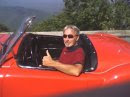
After John (Nancy's brother Tom's son -- Tom is in the picture above with sis) came under new management Saturday, the new couple headed off to Spain to undertake the 800 km pilgrimage route of Santiago de Compostela (yes, on foot) across the Pyrenees and the northern edge of Spain to the Atlantic. That will not be a forgettable honeymoon, at the very least.

Wednesday, June 17, 2009

A Noncontroversial Joke for David Letterman

At a private girls' school, things were quiet except for a recent complaint from the janitor. It seems the students were putting lipstick on and placing big smooches all over the restroom mirrors. Not real high on the scale of past, or possible, misdemeanors, but unhappy staff members were taken seriously by the principal. Addressing her charges at the next assembly, she asked them to desist, citing all the unnecessary extra work they were causing the janitor.
They kept on, of course, because no better prank idea had occured to them yet. A week later, the principal took the girls after lunch to the restroom along with the distressed maintenance man, and said, "I want you to see how much work this is for him." After she nodded in his direction, he dipped his mop into the toilet and scrubbed the numerous lipstick smudges off the mirror.
There are teachers, and there are educators.

Monday, June 8, 2009

Just Wondering

My grandfather once gave me, when I was too young to know enough to be interested in things far outside my little world, a Mexican peso he said his father got in Mexico when he was there in 1916. There was, it seems now, a huge story there that I missed and now can never unravel. My great grandfather, Charles Grant Rice (named after Ulysses S.), died fairly young in 1932. His farm was on a windswept hill in Perry County, PA, between two insignificant villages, so how he came to go to Mexico in the midst of its violent early 20th century revolution, a task both difficult and dangerous, is to say the least, a mystery. Like all the Rices until my grandfather, he was a farmer and builder. The homestead is fairly large, has a kitchen outbuilding, a large barn still just standing, and had a chicken house at least as large as a barn. I was told he installed the first 1-cylinder gasoline engine in the county to pump water up from the creek to the house. When brother Steve and I first visited the homestead in 2005, I saw just why this was a good move: the creek was down an extremely steep and tangled bank, and I can just imagine how wonderful it must have been to fetch water during those long and harsh winters before the pump was in place. He also during his too-brief life acquired several other properties, one of which was occupied by the third son all his life; the others went to the other brother, whose descendants seem to have prospered from over the years. My grandfather spent about a year in Iowa doing farm work in 1916; did Charles G. proceed on to Mexico after accompanying him there, for reasons unfathomable? The peso is almost a hundred years old, and tells me nothing more.
I have also been wondering for years why people who are supremely qualified by educational credentials and glorious resumes are such utter disasters. Former Supreme Court nominee Bork and politicians Alan Keyes and Phil Gramm have doctorates, and are in the first two cases, insane, and in the third, completely wrong about everything in his specialty (economics). John Soo, Yale-educated lawyer in the Dubya administration, gave the legal go-ahead to W and Cheney to violate the Constitution, the law, and all accepted American (indeed, Western) political tradition. An unknown local lawyer with a state university degree who behaved in such a manner would have been censured and disbarred. Dubya has a Yale degree and a Harvard MBA, and yet pulled a clearly and completely illegal insider-trading manoeuver to bail out of his failed oil company, which netted him millions. How do both these prestigious institutions admit and graduate someone with such a deficient character (and marginal personality disorder) who was arrested three times for redneck misdimeanors and who deserted from the National Guard in wartime? (I had several people picked up by local police while in desertion status as a case investigator for the Army. I know the law on AWOL and desertion).
As this makes my stomach hurt, I'll go back to wondering about the peso.

Friday, June 5, 2009

You Can Have This, or That

When your world changes due to work, retirement, health, outside forces or just a hit of bad or good luck, the opportunities and frustrations seem suddenly different but the song remains the same: you can't ever maximize more than two out of three things and you have to take the inevitable setbacks with resilience. Hard to keep in mind when you lose several in a row, but trust that the principle of Balance will benignly work things out, more or less.
Unplanned unemployment is so much harder than an orderly retirement, obviously, but there are some who don't have much going on that can compare to the sense of importance and accomplishment at work, and that's a danger sign. You can stop being essential and important and it doesn't invalidate that you were for quite a while. It's okay -- remember, you're mortal and that's that; do you have the stuff to rearrange your meaning like a jigsaw puzzle that was complete and is now just a heap of pieces again? Don't be afraid to look at those old pieces of you and make a new picture. You had to follow the instructions on the box the first time. Now you can have some creative fun and get away with it. No one's really watching anymore.
My own plan is so trivial it would be embarassing if I gave a hoot. It's just to plan and set up little projects to keep what's left of the mind in working order, do some good, keep skills up and be open to serendipity as I range around this little patch of Earth. I've done big fat expensive exhausting projects in the working world, and usually pulled them off, but it's good for yourself and the succeeding generation which needs to grow and prove itself, to move off the stage and into the microcosm. Small is beautiful.
The last few weeks have been a dance with Nature, and she's stepping on my toes. Working on the facade of The Local Beat Cafe's building downtown and finishing the box garden in Zach's yard are both dependent on fairly good weather, and that's been seen only occasionally between rolling waves of rainstorms. I take the umbrella along most days, a feeble defense, but it's all I've got (except permanently wet shoes). Any progress made is a joy since no one's setting deadlines; look at the broccoli forming in the picture above. I guess the rain has its good side.
Sometime in mid-June (after a fun break to attend nephew John's wedding in Louisville), I hope to finish and post the picture of the re-done Local Beat Cafe facade, with the new sidewalk and streetlight. The newspaper gave them a front-page story and two photos in Sunday's edition; the publicity, the bright new look and the musicians playing there for the love of it are, we hope, a perfect storm that will bring a sunny tomorrow.
The next project? I've had little time to practice my four-string thunder machine, so when I'm in California during August that will be the thing to do (along with lessons, maybe, at Jensen's Music on De La Vina Street, unless they throw me out as a hopeless case).
Moving sideways in life instead of up? Feels just fine.

Tuesday, May 26, 2009

The Things You Do When You're Not Doing That Thing You Do


Avocations, hobbies and enthusiasms add a lot to life beyond work; you are in control more, you can put your real self into it, you can live larger than you're normally allowed to. Some people need these escape venues a lot; others like the normal pattern of home/work/family just fine. If you're possessed of an overactive imagination, you'd be of the first type. Fishing is a Zen-like, simple pasttime; fly tackle and boats are expensive but it can be done very simply just as well. Surf casting always looked like fun to me; once in North Carolina we saw people pull in several very big fish of unknown types, and they were definitely looking forward to a delightful meal with friends and family. Tough for the fish, but good times for their captors.

My hobby for decades was finding, collecting and enjoying books and records, but I had to stop a while ago or rent storage space! After that I read everything in the local libraries of interest (to me), and the internet unfortunately makes finding rarities too easy to be fun. Once I looked for a book for over thirty years before finding it -- quite satisfying.

Nancy's avocation has and probably always will be traveling...in search of the perfect beach, blue sky and sapphire water; an outdoor massage under a billowing white tent being a good way to while away an afternoon in such a spot. She would be very happy never to come back, too.

I needed a creative outlet after my time in the hectic world of exhibits was over, and found an exciting one in 18th-century reenacting. The social and political history of the Enlightenment era, along with its material culture, had always drawn me in, so I joined a local group which portrayed colonial militia, French-Canadian militia, and the Pennsylvania State Regiment (all in the 1754 - 1781 period). Ancestors were in the French and Indian War and the Revolution (one, wounded at Brandywine, hid in a culvert, survived and lived to an old age), so a direct connection was there. Zacharias Reiss and his family constructed the only purpose-built Continental military hospital at Yellow Springs, PA, and a young daughter, Susannah, offered a drink to Washington during the retreat from the defeats around Philadelphia (addressing him as "Your Majesty," to which he replied, "There are no kings in America, little lady.")

Above is a picture of French Regulars and Marines relaxing to music inside old Fort Niagara. Despite a soggy night battle with the British and colonial Rangers (wool doesn't dry out too fast), while there we really enjoyed hearing real French Canadians sing and play in the very spot their distant ancestors did in the 1750's. With everything either original or documented reproductions, and only fireplaces and candles, you really felt the part.

In the other picture, French militia (armed ordinary citizens and farmers of New France, a small but formidable guerilla force that, along with their numerous native allies, kicked the British Empire in the seat for years), advance across the field brushing the lobsterbacks aside. We loved pouring down wooded hills to attack a British wagon train or column, with the Indians screaming, smeared in red and black paint, tomahawks whirling in the air. At Old Mill Village, the spectators, led along a dark mountain trail by the Brits, played the part of colonials marching from an attacked fort to safety -- or so they thought until 40 of us jumped up and scared the s--- out of them! The best part of the scenario was a real Abenaki Indian who stopped the train to demand (loudly in his own language) the release of a bedraggled French prisoner as a ruse to set up the ambush. With our commander shouting orders in French, and the woods quickly filling up with pungent white smoke, we roared out with each shot, "Vive le Roi!"

In addition to learning a lot more about events of the era, the actual locations where they took place, and the realities of the mid-18th century world, I learned hand sewing and leather work (got the holes in my hand to prove it). I sold my reproduction 1734 Tulle Armory musket (it was copied after the only one left in existence), but I still have the hickory-handled tomahawk, in case His Grace King Louis should need me again.

Saturday, May 23, 2009

More Little Surprises at the River


Every year when we go to the ArtsFest in Riverside Park along the river, there's always something musical that's new, and delightful. A couple of years ago an engaging dude from California was selling, and of course playing, his replicas of Jerry Garcia's iconic guitars, the Tiger and the Wolf. They looked and sounded great.


A jazz sitar player returned this year, playing along with one of his many CDs. The most mesmerizing duo appeared only one year; they were a willowy couple who played wind and string instruments and sang their fairy-tale songs. I really should have bought a CD of theirs -- just beautiful aural art.


This year's treat was a local lady who teaches a special children's music program designed in Princeton, NJ, called Music Together. She was playing what looked like an old '50s sci-fi B-movie prop of a flying saucer! It is called a Hang Drum (it means "hand") and sounds somewhere between a steel pan drum and a harp and was created by two musical artists in Switzerland. These "melodious tuned steel idiophones" are, it seems, handmade in limited quantities and very hard to get. Played either in the lap or on a stand using fingers and hands instead of mallets, different models have a variety of scales.


We were there early in the day this year and thus missed the many bands who play from afternoon into the evening. The eccentric soloists are so much easier to see and hear before the crowds fill every inch of sidewalk and street, and they create vivid memories for this tourist slouching through culture.